The Most Overlooked Productivity Tool Isn’t an App—It’s Your Sense of Smell
Hi. It's 2026. And at this point, we’ve optimized almost everything about how we work.
We track our time. We experiment with morning routines. We read books on focus. We install productivity apps designed to eliminate distraction.
And yet burnout continues to rise. Attention spans continue to shrink. Even high performers describe feeling scattered or mentally overloaded by midafternoon.
So much in fact, you're actually starting to wonder if there's something wrong with your brain.
What if the issue isn’t effort—but input?
Specifically, sensory input.
There’s one tool that most professionals use accidentally—but almost never intentionally: scent.
Why smell bypasses your “thinking brain”
Here’s a piece of neuroscience that rarely shows up in conversations about work performance:
Scent is the only sense that connects directly to the limbic system—the part of the brain responsible for emotion, memory, and motivation—without first passing through the thalamus, the brain’s rational relay station.
In practical terms: scent reaches you before thought does.
That’s why the smell of chlorine can instantly transport you to childhood swim lessons. Or why a certain cologne can trigger a visceral emotional reaction before you’ve consciously identified it.
⚡️Your brain forms rapid associations between scent and state.
And state—more than your own thoughts—determines how well you work.
Productivity is state-dependent
We tend to treat productivity as a systems problem.
👉 If we just organize better, prioritize better, or manage our calendar better, we’ll perform better.
But cognitive performance is highly state-dependent.
Focus requires a different internal state than creative brainstorming. Strategic thinking requires a different state than client-facing confidence. Deep work requires calm alertness—not anxiety, not fatigue.
Most professionals attempt to think their way into these states.
And that works—sometimes.
But when you’re overstimulated, burned out, or juggling multiple roles, your nervous system doesn’t always cooperate just because you’ve decided it should. Good luck with that😅
This is where scent becomes interesting—not as a lifestyle accessory, but as a state cue.
The science of state-based recall
Hang tight - Immabout to get super nerdy, but I have a point:
In behavioral psychology, there’s a concept known as state-dependent learning or state-based recall. When you repeatedly experience a specific stimulus alongside a specific mental or emotional state, the stimulus can later help trigger a return to that state.
Think about what you've seen every day. Athletes use music this way to warm up before a game same songs, similar warm up routines. Some executives wear a specific watch only during major negotiations. People have a ritual prior to beginning something that's pretty intense - to get them hyper focused.
And it works. Why? Because they repeat the action every time before they face a big challenge or project that they must succeed in.
Actions are great, music is great, but scent works particularly well because of its direct neurological pathway.
If you use a particular aroma exclusively during focused work sessions, your brain begins associating that scent with concentration. Over time, the scent itself can act as a cognitive “on switch.”
Similarly, pairing a different scent with creative work can help signal to your brain that it’s time to think expansively rather than analytically.
This isn’t magic. It’s conditioning.
And conditioning is something high performers already understand.
Why this matters in a distracted economy
We work in environments saturated with sensory noise—notifications, open office chatter, endless scrolling. Our brains are constantly reacting.
But we rarely design our sensory inputs with intention.
We design our calendars.
We design our workflows.
We design our slide decks.
We don’t design how our nervous system enters a room.
In my own work as a founder, I began noticing how certain aromas consistently supported specific types of work. And I discovered papers backing up those feelings with studies on the use of certain essential oils. Certain essential oils felt safe in nature, helping me feel safe with surrender and release. Peppermints and citrus fires up my energy and supported deep analytical tasks. A softer, warmer scent helped me wind down at night so I wasn’t mentally drafting emails at 11 p.m.
The shift wasn’t dramatic. It was subtle—and repeatable. So I practiced in - only a few times before it really took hold.
And that’s what made it powerful.
How to use scent strategically💥
You don’t need a complicated ritual.
Start with intention and consistency.
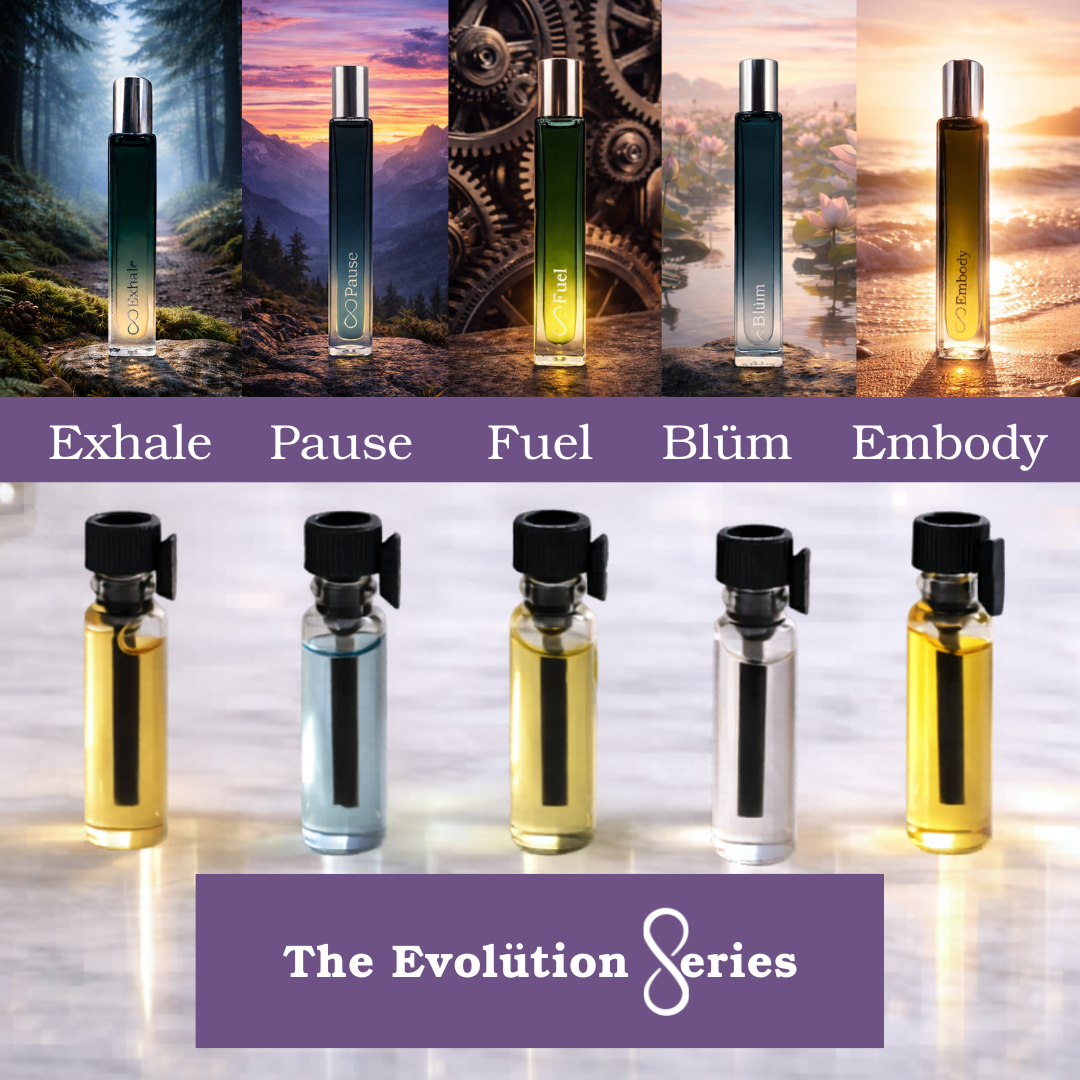
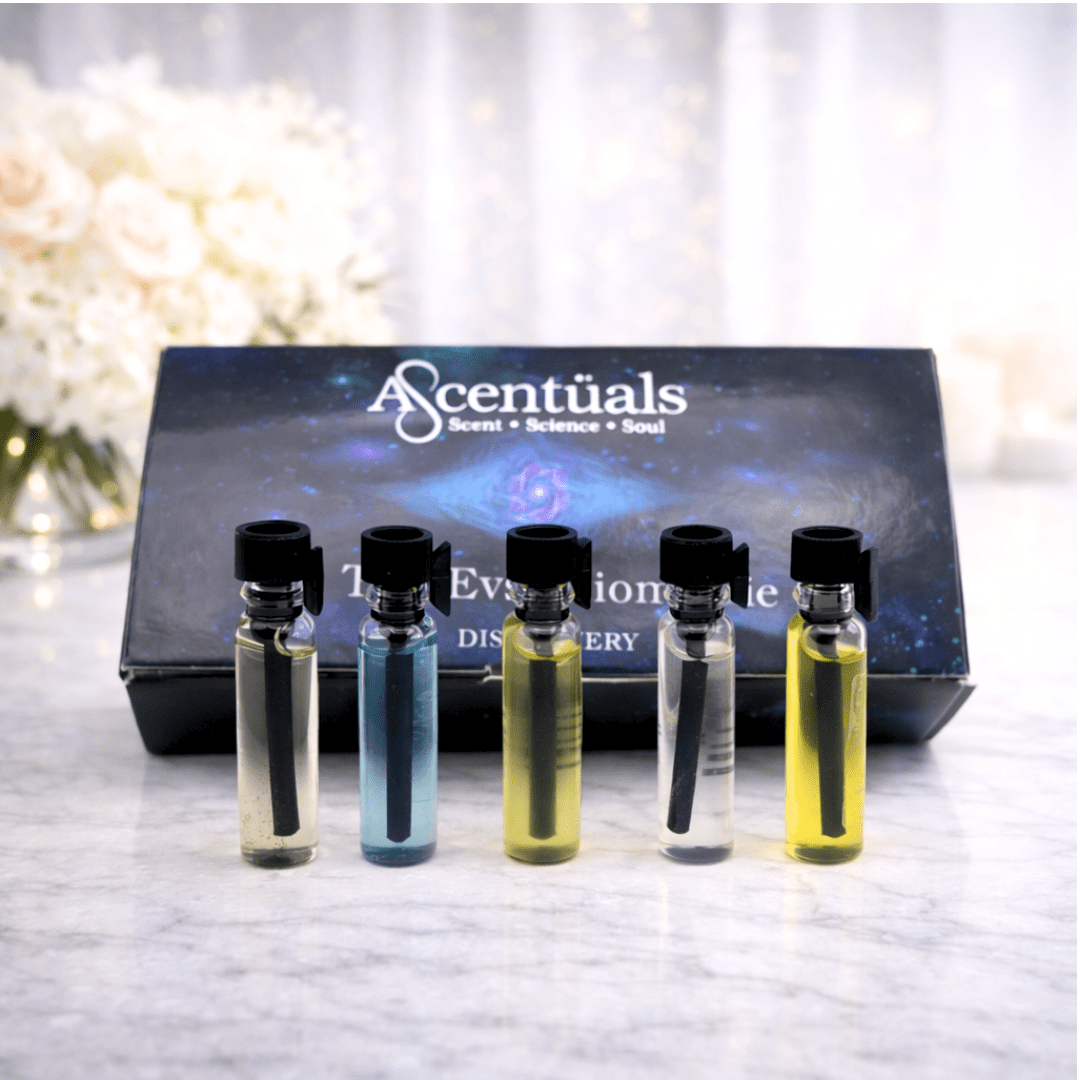
I have created 5 different blends in the Discovery Scent series - you could literally try this for 15 bucks to see if it works for you I already made the blends. See the listing here.
Use them consistently. Avoid cross-using them in unrelated contexts. Give your brain time to form the association.
The goal isn’t dependency. It’s reinforcement.
Over time, you may notice that your body settles more quickly into the intended state. The ramp-up time between “scattered” and “focused” shortens.
In a world obsessed with optimizing output, shortening ramp-up time might be one of the most overlooked advantages available.
Rethinking performance tools
Not every performance tool needs to be digital.
Some of the most effective cues are analog, embodied, and subtle.
We are sensory beings operating in highly cognitive environments. Ignoring the sensory layer of performance leaves leverage on the table.
The future of productivity may not just be smarter software—but smarter state management.
And sometimes, the fastest way to shift your mind isn’t through another thought.
It’s through your senses.
I designed this set to help you + me do what we gotta do.

Til The Next One,
BrookeLynn